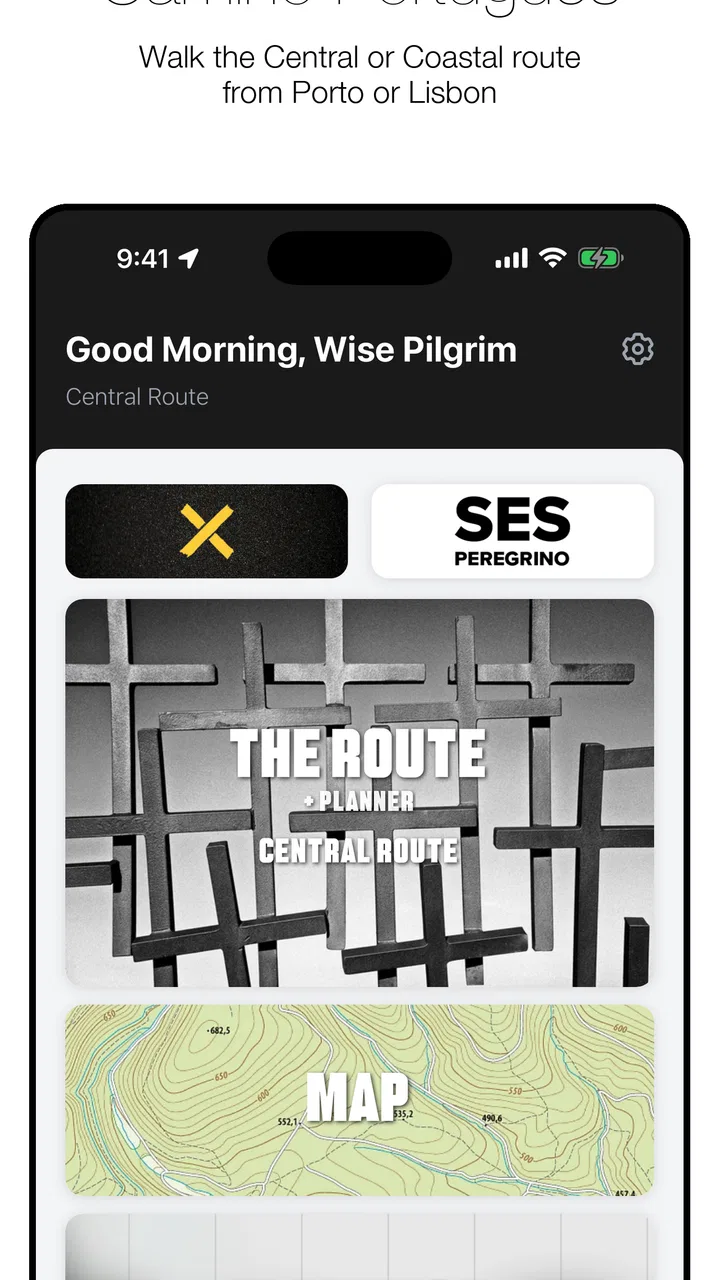
Wise Pilgrim Camino Portugués
- 2.5
- Rating
- 10.00K
- Installs
- $4.49
- Price

 Analysis by App-foxy
Planning the Portuguese Way is very different from planning an ordinary city break. Distances, weather, sleeping arrangements, food stops, navigation and tired legs all affect the same day, so I found myself wanting one practical reference rather than a pile of disconnected pages. Wise Pilgrim Camino Portugués is built for that exact situation: a paid travel app from Wise Pilgrim Guides focused on the route from Lisbon to Santiago. After using it as a planning companion, I see its value less as a flashy travel product and more as a guidebook that can stay useful when the excitement of booking the walk has worn off.
The first impression is straightforward. This is not trying to be a general travel platform, social network or booking marketplace. Its purpose is narrower, and that focus is helpful. Instead of asking me to translate a broad search for “things to do in Portugal” into a pilgrimage plan, it keeps attention on the route itself. That makes it particularly suitable for someone walking the Camino Portugués, considering the route seriously, or supporting a friend who is already on the road.
What the first week feels like
During the first week, the app’s strongest quality is concentration. A new pilgrim can easily become overwhelmed by blogs, videos, map tabs and conflicting advice. A dedicated guidebook gives the planning process a center. I could think in terms of stages, daily decisions and practical preparation instead of constantly switching between unrelated travel sources.
You May Also Like

 Blood Strike: 2.5 Anniversary
Blood Strike’s Loadouts Turn Every Drop Into a Tactical Gamble
A close look at Blood Strike’s custom loadouts: how fast access to signature weapons reshapes its battle royale rhythm, rewards preparation, and narrows the gap between fights.

 Pandora - Music & Podcasts
Pandora’s Music Is Easy to Start, but Harder to Recover
Pandora’s strength is its low-effort path from a seed to a station. Its weak spot is how much confidence it asks you to place in connection, setup, and quiet recovery.

 8 Ball Pool
 Is Built on Rivalries, Rematches, and Routine
A close look at the rivalries, rematches, shared routines, and unanswered safety questions that turn a quick pool match into a persistent mobile community.

 Samsung Music
’s Quiet Strength Is Playing What You Already Own
Its reach comes less from spectacle than from dependable access to a personal library. That simplicity is both the app’s strongest retention engine and its ceiling.

 AccuWeather: Weather Radar
AccuWeather Review: A Quick, Clear Forecast for Everyday Decisions
For everyday plans, the best forecast is the one you can understand quickly. AccuWeather makes rain timing, radar, and local conditions easy to act on, with a few trade-offs.

 Hill Climb Racing
Why Hill Climb Racing Still Turns Crashes Into One More Run
A tiny car, a bumpy hill and one more upgrade: Hill Climb Racing keeps resurfacing because its simple chaos makes every near-miss feel personal.
More From Our News Desk
View All News


That focus matters most before departure. I would use it while deciding how much of the route to attempt, marking sections that deserve extra attention and making a rough plan that leaves room for slower days. The route from Lisbon is a substantial undertaking, so the app is more useful when treated as a planning framework than as a promise that every day will unfold exactly as expected.
On the road, a guide like this earns its place through small moments. A tired walker does not want to reconstruct an entire itinerary from scattered search results after arriving somewhere late. Opening one route-specific reference can make the next decision feel manageable: continue, stop, adjust the following day or simply check what lies ahead. That is a practical benefit, even when the app is not doing anything dramatic.
I also appreciate that its audience is clear. The developer, Wise Pilgrim Guides, is not presenting this as a universal travel planner. The app belongs in the Travel & Local category and is specifically aimed at people interested in this pilgrimage route. That specialization makes it easier to decide whether it belongs on your phone: if Lisbon to Santiago is central to your plans, the focus is an advantage; if you only want occasional sightseeing suggestions, it is probably too narrow.
The purchase model affects that first impression. The app costs $4.49, so I do not approach it like a free experiment that can be deleted without thought. That price is still modest compared with the wider cost of a pilgrimage, but the app needs to be useful beyond a single curious glance. I would recommend spending time with it before departure rather than buying it only after reaching the starting point. A route guide has more value when it helps shape expectations and packing decisions early.
One useful habit is to separate “must know” information from “nice to know” information. I would first use the guide to understand the rhythm of the route, then return to it for details as the trip approaches. This avoids the common mistake of building an over-detailed itinerary that leaves no room for weather, fatigue or an unexpectedly slow morning. The app works best as a flexible reference, not as a strict timetable.
Planning around real walking days
A realistic Camino plan should be built around the person walking it, not only around the map. I would use the app alongside a notebook or phone note to record intended stopping points, alternate plans and questions to verify before leaving. That extra step is important because digital guidance can encourage false confidence. A route may look simple on a screen while feeling entirely different after several hours with a pack.
For a first-time pilgrim, the most valuable workflow is to review the next section in advance, identify the decisions that matter, and then stop researching. Constantly checking every possible alternative can create more anxiety than clarity. The guide’s narrow purpose helps here: it gives me a route-specific place to begin, while my own judgment remains responsible for pace, comfort and safety.
It is also worth preparing for limited attention. When I am tired, I prefer short checks rather than long reading sessions. Before walking, I would open the relevant material, note the important points and keep the phone away during the day unless I genuinely need it. That approach turns the app into a tool instead of another source of screen time.
Why it can remain useful after the novelty fades
The first few days of any travel app are easy to enjoy because everything feels new. The harder question is whether it remains useful once the route becomes a routine of walking, eating, washing clothes and sleeping. In my view, this guide has recurring value because the Camino is naturally divided into changing stages. What matters today may be irrelevant tomorrow, so a route-specific reference can be reopened repeatedly without requiring a fresh research session each time.
Its long-term usefulness depends on how you travel. Someone who plans every detail once and never revisits the plan may get most of the benefit before departure. Someone who adjusts each evening can use it as a continuing companion, checking the next section and reshaping the following day. I prefer the second approach. It respects the fact that a pilgrimage is not a fixed sightseeing circuit; energy, weather and personal priorities can change the plan.
A practical month-to-month use case is the person preparing gradually rather than leaving soon. I would return to the app while building walking fitness, comparing the route with available holiday time and deciding whether to attempt the complete journey or a selected portion. That makes the purchase more defensible than a guide opened once at the airport. It becomes a reference for several planning decisions instead of a last-minute download.
The app can also help people who are not walking the whole route. A traveler may want to experience a particular segment, a returning pilgrim may be revisiting a familiar section, and a support person may need a clearer sense of the journey. The guide’s value changes in each case, but the route focus remains relevant. I would not expect it to replace every local source, yet it can provide continuity when the trip crosses several places and decisions.
There is a useful trade-off between specialization and breadth. A normal map app is better for searching unrelated businesses, checking live transport information or navigating an unfamiliar city after leaving the trail. A broad travel guide is better for museums, restaurants and general sightseeing. Wise Pilgrim Camino Portugués is more appealing when I want the pilgrimage itself to remain the organizing idea. It reduces the temptation to treat the route as merely a sequence of tourist stops.
That distinction also explains why I would not recommend it to everyone in a travel group. If one person wants detailed cultural research and another only wants spontaneous walking, a dedicated Camino guide may feel too focused for the second traveler. Likewise, people who already have a trusted printed guide and a well-tested navigation setup may find the additional purchase unnecessary. The app’s usefulness is strongest when it fills a real gap rather than duplicating tools already working well.
Keeping the guide useful without making it a chore
The best recurring habit is simple: check the next section once, make a flexible decision, and move on. I would avoid repeatedly refreshing the same information or trying to solve every possible problem before it happens. A guidebook cannot remove uncertainty from a long walk, and treating it as if it can will make the experience more tiring.
I would also keep a separate personal record of what actually happened. Note the distance that felt comfortable, the type of day that caused problems and the choices that made the walk easier. That turns the app into a reference rather than a diary. On a future trip, those personal observations may be more useful than any generic recommendation because they reflect my own pace and habits.
For families or groups, the app can support a short evening conversation: review tomorrow, agree on a sensible target and decide what needs checking elsewhere. This is better than passing one phone around all day. It gives the guide a defined role and reduces arguments caused by everyone following a different source.
The maintenance burden and everyday friction
Every travel app creates maintenance work, even when that work is invisible. I need to keep my phone charged, make sure the application remains available when I need it and avoid depending on a single digital source for decisions that affect my day. A route guide is not a substitute for preparation, and I would carry a backup approach for essential navigation rather than assuming one app can handle every situation.
The app runs on Android devices using version 7.0 or later, which makes it accessible to many older phones. That is useful for travelers who do not want to replace a perfectly serviceable device just for a trip. At the same time, an older phone may have its own battery, storage or performance limitations. The minimum operating-system requirement is friendly, but it does not eliminate the need to test the app on your actual device before departure.
Testing early is one of my strongest recommendations. Open the guide at home, learn how its information is arranged and decide how you will use it when tired. If you wait until the first walking day, even a modest interface learning curve can feel irritating. I would also charge the phone fully, reduce unnecessary battery use and keep a physical note of the most important plan details.
Updates are another part of the maintenance picture. The current version is 6.5.0, which shows that the app has continued to receive version changes since its release on March 23, 2016. That history is reassuring in one sense: it is not a brand-new guide appearing without a track record. Still, no update history should encourage blind reliance. I would review the app before each trip and confirm that it behaves as expected on the device I plan to carry.
The biggest maintenance burden is mental rather than technical. Pilgrims can spend too much time comparing sources, checking every possibility and worrying that they have missed a better plan. My solution is to give this app a limited job. Let it organize route thinking, use other tools when a question falls outside that job, and accept that some decisions will remain provisional.
There is also the question of cost over time. At $4.49, the price is low enough to be reasonable for a serious route plan, but not so low that I would buy it automatically for a vague future possibility. If the Camino is only an idea with no likely trip, waiting makes sense. If I am actively preparing, the cost is easier to justify because the guide can be consulted during planning and walking rather than used once.
Where fatigue and disappointment can appear
The average rating is 2.5 from around 118 ratings, with around 11 written reviews, so I would approach the purchase with measured expectations rather than assuming universal satisfaction. A rating like that does not tell me exactly which experience another person had, but it does signal that the app may not suit every device, travel style or expectation. I would judge it as a focused tool, not as a complete answer to every Camino problem.
One likely source of fatigue is overreliance. A route guide can make planning feel organized, but it cannot account perfectly for how a particular morning unfolds. Delays, tiredness, changing conditions and personal preferences still require judgment. If I followed any digital guide mechanically, I would risk turning a flexible pilgrimage into a stressful checklist.
Another limitation is the difference between route guidance and live local information. When I need current opening details, immediate transport choices or a last-minute service decision, a general map or local source may be more suitable. I would use this app for route context and preparation, then switch tools when the question becomes time-sensitive or highly local.
Some users may also find a dedicated guide less satisfying than a paper book. A printed guide is easy to annotate, does not depend on a battery and can feel calmer during a long walk. On the other hand, a phone-based guide is lighter and easier to carry alongside other travel tools. The better choice depends on whether convenience and portability matter more to you than the reliability and visual comfort of paper.
The app may disappoint travelers looking for a complete holiday companion. The route is the subject, not a full replacement for broader travel planning. Before and after walking, I would still want ordinary travel resources for accommodation research, transport, sightseeing and personal arrangements. That is not a flaw in a route guide, but it is an important boundary.
There is also a psychological downside to having too much information close at hand. I noticed that the temptation to check the next stage can interrupt the feeling of being present. My workaround is to review information at deliberate times, such as before setting out and after arriving, rather than consulting the phone whenever uncertainty appears. This makes the app more helpful and the walk less screen-centered.
Who should make room for it
I think it is a good fit for a first-time Camino Portugués walker who wants one focused starting point and is willing to make independent decisions. It is also useful for someone planning months ahead, because the route-specific perspective can guide questions about time, pacing and preparation. A companion who needs to understand the structure of the journey may benefit as well, even if they are not walking every stage.
I would skip it if my trip is unrelated to the Portuguese Way, if I already own a trusted guide that covers precisely the same needs, or if I expect a broad city-travel app with live local services. I would also hesitate if I dislike digital reading during travel and already prefer a paper-based system. The purchase makes sense when its specialization solves a concrete planning problem.
My long-term verdict
After the novelty fades, Wise Pilgrim Camino Portugués earns lasting space only when I use it with a clear routine. Its strength is not entertainment or endless discovery. It is the ability to keep a long, complicated walking route in view while I make practical decisions one section at a time. That is a modest role, but it is exactly the role a good pilgrimage guide should play.
The app’s age rating is Everyone, and its broad accessibility, focused subject and modest one-time price make it approachable for many travelers. The developer’s route specialization is its main reason to consider it, while its narrow scope is the main reason to look elsewhere if your needs are broader. The install base of over ten thousand suggests that it has reached a meaningful group of travelers, but I would still let my own route and planning style decide.
My final recommendation is conditional but positive: buy it if you are genuinely preparing for the Lisbon-to-Santiago journey and want a dedicated digital guide to revisit throughout the process. Test it before leaving, keep a backup for essential decisions, and do not confuse route information with a rigid schedule. If you take that balanced approach, the app’s recurring value comes from reducing research friction without taking control of your pilgrimage.
For me, that is enough to justify keeping it installed. It will not replace maps, local judgment, personal preparation or the occasional printed note. It does something more specific: it gives the Camino Portugués a stable place in my planning routine. When the trip is months away, that focus helps me prepare; when the walk is underway, it helps me think about the next section; and when fatigue arrives, it gives me a familiar reference instead of another round of scattered searching. That is why I would recommend Wise Pilgrim Camino Portugués to a serious pilgrim, while steering casual tourists toward a broader travel alternative.
FAQs for Wise Pilgrim Camino Portugués
01What is Wise Pilgrim Camino Portugués?
Wise Pilgrim Camino Portugués is a travel and pilgrimage guide designed for people walking the Portuguese Camino routes to Santiago de Compostela. It provides practical information about stages, distances, elevation, accommodation, food, services, maps, and points of interest. The app is especially useful for planning each walking day and checking facilities along the route.
02Which routes and sections of the Portuguese Camino does the app cover?
The app focuses on the main Portuguese Camino itineraries, including routes beginning in Portugal and options that continue through Spain toward Santiago de Compostela. Coverage may vary depending on the selected route and app version, so walkers should check the route list before downloading. It is helpful for both traditional coastal and inland pilgrimage planning.
03Does Wise Pilgrim Camino Portugués work offline?
One of the most useful features for pilgrims is access to route information when mobile coverage is limited. Wise Pilgrim apps generally allow important content, such as maps and guide details, to be used offline after downloading the necessary data. It is still recommended to open the app and download or update content before leaving Wi-Fi.
04Can the app help me find accommodation and other services?
Yes. Wise Pilgrim Camino Portugués is intended to help walkers locate practical services along the trail, including albergues, hotels, restaurants, cafés, supermarkets, pharmacies, laundries, transport options, and medical assistance. Availability and opening hours can change, particularly outside the high season, so the app should support—not replace—direct confirmation with providers.
05Is Wise Pilgrim Camino Portugués suitable for first-time pilgrims?
Yes, the app can be valuable for first-time pilgrims because it combines route guidance with information needed for daily decisions. Users can review distances, elevation changes, towns, services, and possible overnight stops before starting a stage. However, beginners should also carry water, identification, basic medical supplies, and a backup navigation option in case of technical problems.
Pros
- Detailed route maps work offline
- useful in areas with weak mobile coverage.
- Stages include elevation profiles to help plan daily walking distances.
- Pilgrim services and accommodation listings are easy to check on the route.
- Supports practical planning for different Camino Portugués variants.
- Simple interface makes key trail information quick to find.
Cons
- Some route and business information may become outdated between app updates.
- Coverage is focused on Camino Portugués rather than general hiking trails.
- Offline maps and content require preparation before starting the walk.
- Advanced planning features may be limited compared with dedicated navigation apps.
- Some useful information may depend on in-app purchases or premium access.

Wise Pilgrim Camino Portugués
Gallery